Freshworks Device42 acquisition: What does this mean for Freshservice customers?

Freshservice closes a change window after the Device42 deal news. Discovery looks better on the roadmap slide. The CMDB still cannot show which checkout path sits on the hosts in that window, so the ticket stays thin when production slows after cutover. The acquisition can strengthen Freshservice ITAM and discovery. It does not automatically hand teams shared runtime accuracy across assets and services.
Freshworks completed its acquisition of Device42 on June 6, 2024, after announcing the deal earlier that spring. Device42 brings discovery, inventory depth, and dependency mapping into the Freshworks IT portfolio. For Freshservice customers, the practical question is whether change and incident work will run on current configuration items with service context, or on a roadmap promise that still leaves blast radius manual.
| When Freshservice workflows need discovery-sourced CIs and service paths, not only a stronger vendor roadmap, the missing layer is shared runtime accuracy. Explore Trusted Runtime Truth. |
What does the Freshworks Device42 acquisition mean for Freshservice customers?
Freshworks completed the Device42 acquisition in June 2024 to deepen discovery, ITAM, and dependency mapping around Freshservice. Customers should still validate how discovery feeds the CMDB, how service maps are defined, and whether change impact stays visible inside day-to-day ITSM work.
What does this Freshworks Device42 acquisition mean for Freshservice customers?
For Freshservice users, the deal is a capability bet: more automated asset discovery, richer inventory detail, and stronger dependency views feeding ITSM. Device42 has long competed on agent and agentless discovery across physical, virtual, and cloud assets. Freshworks is folding that depth into its IT story for mid-market and enterprise buyers.
That can help teams already on Freshservice that wanted deeper discovery without a second inventory silo. It does not remove every gap. Service composition still needs definitions your team owns. Change risk still depends on whether relationships stay current when hosts move. Treat the acquisition as a stronger starting stack, not automatic trusted runtime truth.
| Illustrative Freshservice-plus-Device42 walk-through (not a customer claim): Server owners approve a host recycle because Freshservice shows a clean ticket trail and Device42 inventory lists the box. The business service that still uses that host lives only in a tribal spreadsheet. After the window, checkout latency spikes. A shared service map after service definitions would have shown the path before power-down. |
Enhancing Freshservice with Device42’s capabilities
Integrating Device42-class discovery with Freshservice can strengthen ITAM and ITSM when the sync path is operationalized.
Enhanced ITAM through discovery capabilities
Device42 offers agent-based and agentless autodiscovery for physical, virtual, and cloud servers, software, and network components. Scheduled discovery and CMDB sync matter more than marketing claims about always-on truth. The useful test is whether Configuration Items and relationships in Freshservice stay current enough for change and audit work.
- Automatic updates: Scheduled syncs keep the CMDB current and reduce spreadsheet drift when operators trust the job cadence.
- Detailed information: Inventory can enrich CMDB rows with install paths, license fields, and warranty data when attributes are mapped cleanly.
What does Device42 add to Freshservice after the Freshworks deal?
Device42 adds deeper discovery and inventory for physical, virtual, and cloud assets, plus dependency mapping depth Freshservice alone may not cover. Customers still need to confirm sync design, CMDB ownership, and whether service impact views show up inside change and incident work.
Strengthening ITSM with service mapping
Device42 service mapping and dependency views can help Freshservice teams see infrastructure relationships that tickets alone hide. That supports incident scoping and change impact when maps stay tied to live inventory.
- Improved incident management: Visualizing dependencies helps identify affected services when the map matches production.
- Better root cause analysis: CI relationships shorten diagnosis when they are discovery-backed rather than tribal knowledge.
Operational efficiency gains
- Reduced IT downtime risk: Better dependency visibility supports proactive outage management when owners act on the maps.
- Improved resource allocation: Accurate asset information supports better capacity and cost decisions.
Streamlined change management
With Device42 in the Freshworks portfolio, teams can better assess moves, adds, and changes when dependency data is present in the change record. Inventory updates help only if Freshservice CMDB hygiene and ownership stay disciplined after go-live. Customer satisfaction still tracks whether operators trust the CMDB on the night of the change, not only the acquisition headline.
Three paths after the Device42 deal
Freshservice buyers usually land in one of three paths.
| Path | When it fits | What still breaks |
|---|---|---|
| Stay on Freshservice + Device42 | Freshservice is standard, Device42 covers inventory depth, CMDB sync is owned | Service composition still needs definitions; map freshness still needs proof |
| Dual-stack discovery, Freshservice ITSM | Keep Freshservice tickets; add a second discovery or CMDB authority for gaps | Two inventory planes need reconciliation so operators are not picking truth mid-incident |
| ITSM-agnostic discovery + CMDB + maps | Need discovery-sourced CIs, high-frequency discovery cycles, and ViVID™ maps after service definitions across ITSM paths | Freshservice (or another ITSM) stays the system of engagement; not a rip-and-replace pitch |
Should Freshservice customers stay with Device42 after the Freshworks acquisition?
Stay when Freshservice is the ITSM standard, Device42 inventory depth matches the estate, and CMDB sync ownership is clear. Evaluate another discovery and CMDB layer when service maps, hybrid coverage, or multi-ITSM context stay thin, or when you need an ITSM-agnostic runtime truth plane.
Beyond the Freshworks Device42 deal: How Virima fits beside Freshservice
Virima is not positioned here as a Freshservice replacement. It is a discovery-sourced CMDB and dependency layer that can sit beside Freshservice or other ITSM tools when teams need authoritative inventory and service context for change and incident work.
Virima IT discovery and service mapping
Virima’s agentless, agent-based, and API-based discovery builds and refreshes a CMDB from what scans and integrations find. High-frequency discovery cycles keep CIs current on a scheduled cadence rather than passive event streaming.
ViVID™ and ITAM capabilities
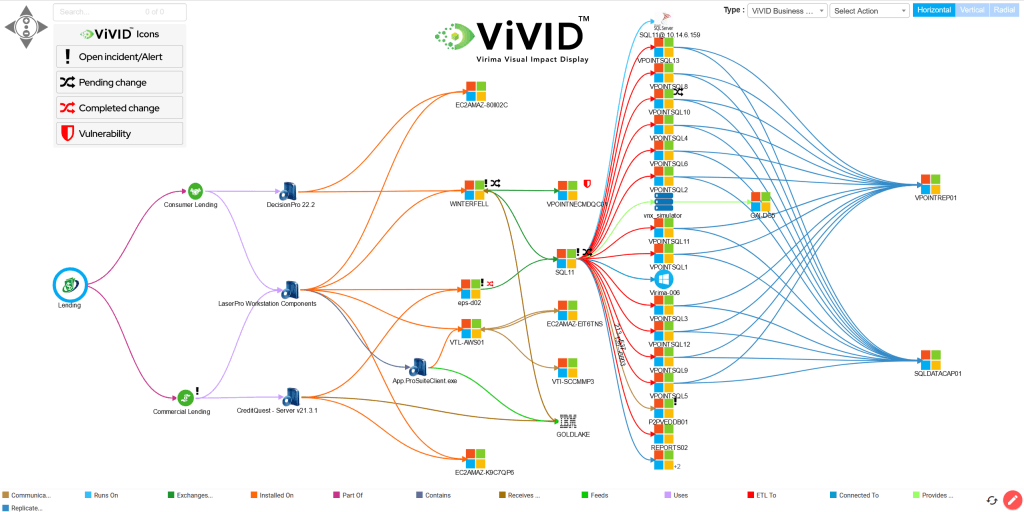
Service dependency map showing applications and infrastructure relationships for change impact review
Once service definitions are provided (manually, by spreadsheet import, or through an enterprise architecture integration), ViVID™ builds dependency maps from that input and does not invent which applications form a service. ViVID™ service maps then show relationships between applications and infrastructure so teams can review change risk against defined services. Virima ITAM tracks assets across lifecycle stages when inventory stays discovery-backed.
Virima integrates with ServiceNow, Jira Service Management, Ivanti, HaloITSM, Xurrent, Hornbill, and more through one integrations hub. For a broader Device42 shortlist, see Device42 features compared with discovery and ITAM alternatives.
How does Virima fit if we already use Freshservice after the Device42 deal?
Virima fits as a discovery-sourced CMDB and ViVID™ mapping layer beside Freshservice when you need high-frequency discovery cycles, service maps after definitions you provide, and ITSM-agnostic integrations. It is not a pitch to rip out Freshservice tickets.
Choose the stack that matches how change actually runs
The Freshworks Device42 acquisition can strengthen Freshservice discovery and ITAM for customers who stay on that path. Integration success still depends on CMDB ownership, map freshness, and service definitions outside tribal knowledge. Dual-stack and ITSM-agnostic discovery layers remain valid when hybrid coverage needs more than a single-vendor roadmap.
Shortlist Freshservice plus Device42 when that is already your operating model and proof is solid. Evaluate Virima when you need discovery-sourced configuration truth and ViVID™ maps after service definitions beside the ITSM you already run.
See how discovery-sourced CMDB data and ViVID™ maps after service definitions sit beside Freshservice so change windows show service paths, not only inventory rows from the Device42 deal narrative.
Frequently Asked Questions
When did Freshworks complete the Device42 acquisition?
Freshworks announced it completed the Device42 acquisition on June 6, 2024, following the earlier spring agreement. Freshservice customers should still treat product integration timelines as vendor-published roadmap items and validate CMDB sync outcomes in their own estate.
Does the Device42 deal automatically fix Freshservice CMDB accuracy?
No. Stronger discovery helps only when scheduled syncs, attribute mapping, and ownership keep Configuration Items current. Teams still need CMDB governance and service definitions before change impact views become trustworthy.
Should every Freshservice customer switch discovery tools after the acquisition?
No. Stay on Freshservice plus Device42 when inventory depth, sync ownership, and day-to-day trust already work. Consider another discovery and CMDB layer when hybrid coverage, multi-ITSM needs, or service mapping after definitions stay weak in production.
How does Virima differ from treating Device42 as the only discovery path?
Virima focuses on discovery-sourced CMDB currency through high-frequency discovery cycles and ViVID™ maps built after service definitions you provide, with integrations across multiple ITSM platforms. Device42 remains a strong inventory option inside the Freshworks portfolio for many Freshservice-centered estates.
Does Virima replace Freshservice?
No. Virima is not a Freshservice rip-and-replace pitch on this page. It supplies discovery, CMDB, and service-mapping context that ITSM tools consume. Freshservice can remain the system of engagement while Virima feeds runtime configuration truth.