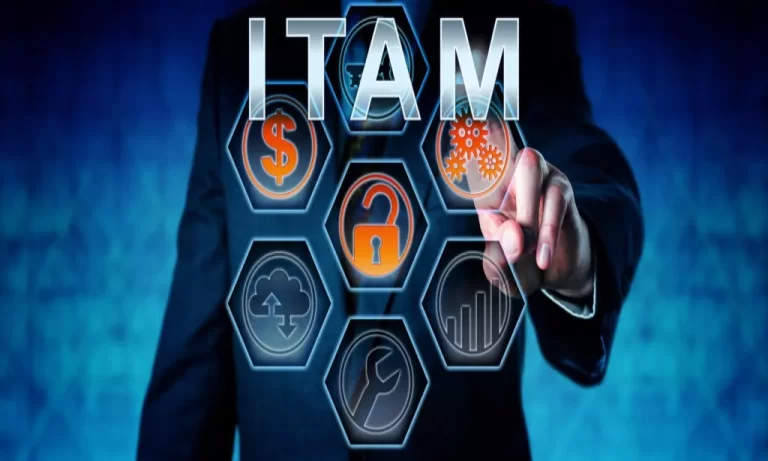
IT asset management vs Inventory Management: How ITAM is different than inventory management?

Finance asks for a hardware refresh list. Audit asks who owns the laptops that left last quarter. Service desk still tickets “unknown device” on the guest VLAN. The spreadsheet that was supposed to be the inventory is three quarters stale, and someone still calls that stack “ITAM.”
IT inventory management and IT asset management share a word, “asset,” and often share a tool login. They do not share the same job. Inventory answers what exists and where it sits. ITAM carries that record through acquire, deploy, operate, maintain, and retire, with cost, contract, owner, and risk fields that a count alone never holds.
This page separates the two disciplines, shows when a clean inventory is enough, and shows when lifecycle ITAM has to sit on top of that inventory. It stays at the concept layer. Vendor bake-offs come later.
What is the difference between IT asset management and inventory management?
IT inventory management records what IT items exist, where they are, and basic attributes so counts stay accurate. IT asset management uses that baseline across the full lifecycle: acquire, deploy, operate, maintain, and retire, with cost, contract, risk, and ownership context. Inventory answers what you have. ITAM answers what it costs, who owns it, and what to do next.
IT asset management vs inventory management: definitions first
IT inventory management is the practice of knowing which IT items exist, where they are, and which basic attributes still match reality. Serial numbers, location, assigned user, and in-stock vs deployed status belong here. Updates follow moves, receipts, scans, and stock counts.
IT asset management (ITAM) is the discipline that runs the technology asset through its lifecycle. That work includes acquisition and onboarding, assignment and recovery, maintenance and support status, software entitlement position, financial fields such as cost and depreciation where finance requires them, and disposal or transfer with a clear chain of custody. Discovery often feeds the inventory layer ITAM depends on. Business impact analysis and formal risk assessment are related planning activities; they are not synonyms for each other, and neither replaces a trustworthy asset record.
So is ITAM another label for inventory management? No. Inventory is the necessary list. ITAM is the lifecycle, financial, and control system that consumes that list. You can inventory without practicing ITAM. You cannot run serious ITAM on fiction.
Is ITAM just another name for inventory management?
No. Inventory is a necessary record of stock and locations. ITAM is the discipline that governs lifecycle decisions on top of that record, including licensing, depreciation, maintenance, compliance evidence, and secure disposal. Teams that only count assets still lack the financial and risk context ITAM is built to hold.
You cannot run ITAM on a missing inventory
Every ITAM workflow assumes a baseline list of configuration items or assets that still match the estate. If discovery, receiving, or HR offboarding never writes that list, “lifecycle management” becomes theater on empty rows.
IT inventory updates when the physical or logical state changes: a laptop ships, a VM is provisioned, a spare returns to stock, a cloud instance appears in a new subscription. Those events are not the same as retail demand signals. Customer order volume does not tell you whether a badge reader still sits on floor three.
Once the inventory row exists, ITAM keeps the fields that inventory alone often skips: owner, cost center, contract end date, warranty, license metric, intended service role, and retirement status. Refresh planning, true-up defense, and secure disposal all fail when those fields drift even if the headcount of devices still “looks right.”
Treat inventory accuracy as the floor. Treat ITAM completeness as the control layer built on that floor.
What “inventory management” means in IT (and what it does not)
In general business language, inventory management often means stock that is bought, stored, sold, or consumed. In IT operations, inventory management means a living register of technology items: endpoints, servers, network gear, spares, and software instances that must stay countable and findable.
An IT inventory tool or process should tell you quantity, identity, location or cloud scope, and a basic status. It may connect to barcode or discovery feeds so the register does not depend on annual spreadsheet campaigns alone. It should not be confused with a full ITAM program just because the UI says “assets.”
Commercial inventory goals center on turnover, fulfillment, and avoiding empty shelves. IT inventory goals center on auditability, support readiness, and a trustworthy feed into lifecycle and service processes. Using a warehouse-style stock model as your only IT control usually breaks the moment you need owner, entitlement, or disposal evidence.
| Dimension | IT inventory management | IT asset management (ITAM) |
|---|---|---|
| Primary question | What exists, and where is it? | What should we do with it over its life, at what cost and risk? |
| Unit of control | Item row: identity, location, basic status | Asset record: lifecycle, finance, contract, owner, disposition |
| Update driver | Receipts, moves, scans, stock counts, discovery deltas | Assignment, renewals, maintenance, audits, refresh, retirement |
| Financial lens | Quantity on hand; sometimes unit cost | Cost, depreciation, license position, vendor spend |
| Success metric | Count and location accuracy | Control, evidence, optimized spend, safe disposal |
| Typical systems | Inventory registers, discovery feeds, stockrooms | ITAM / ITSM asset modules fed by trusted inventory |
For a side-by-side treatment that stays on this same concept pair, see Inventory management vs ITAM: what you should choose.
Other tasks can easily distract you, leading you to forget about your inventory: the number of items or assets in stock, their cost, and their sales or usage status. However, failing to monitor this information makes it challenging to plan ahead and decide what to order next. This oversight could lead to lost revenue or damage your reputation with customers frustrated by unavailable products they desire.
But with a good inventory management software, it’s easy to keep track of all this data without having to do any calculations yourself. The software will automatically determine sales by calculating how frequently an item is purchased and the profit made from each sale. It can also tell you when an item needs restocking
Read: Inventory management vs ITAM: What should you choose?
When managing inventory, ensure your company isn’t overstocked or understocked and avoid obsolete stock. Determining which items sell well and which don’t can be challenging, especially if your inventory spans several locations.
A good way to address this issue is by having an organized warehouse layout. That way, you know where everything is located at all times and can easily identify any areas that need restocking or replenishment. Also, make sure to dedicate time for regular stock checks and counts to maintain accurate data about what’s being sold.
To put it simply, inventory management helps you keep track of your inventory and make sure you have enough on hand to meet consumer demand. It’s used in many different industries, from manufacturing to retail.
Asset management is similar to inventory management in some ways, but it focuses more on internal assets like computers or office equipment. Asset management keeps track of what you have and how much it’s worth so that you can make sure your company doesn’t lose money by selling something that has depreciated too much.
And while they might seem to work similarly, you cannot substitute one for the other.
When is IT inventory management enough, and when do you need ITAM?
Inventory-only can suffice for simple counts, stockroom spares, or a one-time presence check. You need ITAM when assets carry contracts, warranties, software entitlements, assigned owners, or retirement obligations, or when leadership needs cost and risk decisions tied to the estate, not only a headcount of devices.
When inventory is enough, and when ITAM is required
Not every environment needs the same control depth on day one. Matching the discipline to the risk keeps programs honest.
Inventory-heavy is often enough for a small stock of loaner laptops, classroom carts, or sealed spares where the main job is presence and checkout. If nobody is defending software true-ups off that population, and disposal is rare and supervised, a tight inventory process may be the right floor.
ITAM is required when the same laptop class is a fleet with named owners, encryption obligations, refresh cycles, and lease or warranty clocks. It is required when software installs must map to entitlements, not only to package names. It is required when offboarding must reclaim tokens, hardware, and access in one controlled path.
Inventory plus service context is required when a change on a shared platform can take down a business service. A perfect asset count still will not show blast radius. That is the handoff into configuration and service dependency content, not a reason to rename inventory as ITAM.
Use the lighter process where risk is low. Add lifecycle ITAM where money, identity, and compliance attach to the row. Add dependency context where change risk attaches to the row.
How IT inventory and ITAM work together
Inventory supplies the living list of hardware and software instances. ITAM consumes that list, keeps lifecycle and financial fields current, and drives actions such as renewals, reclamation, and disposal. Without a trustworthy inventory feed, ITAM reports drift. Without ITAM processes, inventory stays a static list with little decision value.
Both disciplines can use software. Shared tooling does not make the disciplines identical. The operating model decides whether you only count rows or you manage life, cost, and control on those rows.
Inventory management and asset management are both about ensuring a company can meet customer demand, avoid shortages, and ensure it has the equipment and supplies it needs to sustain operations.
Asset management works in much the same way—it ensures that you have enough equipment and supplies to meet your needs, without having excess or lacking anything important.
Inventory management and asset management both employ technology to achieve their goals. It allows computers to track inventory levels and manage orders automatically. Also, while software assists companies in identifying their assets and keeping track of their locations. Thus ensuring they know where everything is at any given moment.
If you’re looking for a way to improve your inventory management, ITAM may be the answer. But it’s important not to confuse these two terms. They are related in many ways and can work together towards a common goal, but they are not exactly the same thing.
How commercial inventory and IT assets differ in practice
The two main categories of inventory management are purchasing, sales and consumption. Purchasing is the process of acquiring a part or product for use in the manufacturing process. Sales are the processes that occur when a product is sold to a customer. Consumption is the process of using a part or product in the manufacturing process.
Asset management tracks non-production assets such as equipment and real estate. An asset may undergo multiple uses during its lifetime before retirement. Asset management involves analyzing the expected lifespan of each asset, the condition it should be kept in, and the cost of its use.
The inventory management process has traditionally been a manual one. It involves tracking your inventory, ordering new stock when you run out, and counting it all again at the end of each day. This method is inefficient, time consuming, and prone to errors.
It’s also not a very cost-effective way to keep stock. Inventory management without ITAM means that you’re paying for more than you need. Inventory management with ITAM solves this problem in two ways:
1) By making sure that your inventory levels are accurate at all times through automated tracking software
2) By ensuring that there’s no excess stock sitting around costing money every day it sits unused
When inventory quality depends on what discovery can prove across the estate, start with the category view on Trusted Runtime Truth, then map lifecycle fields in your ITAM process to that verified baseline.
Where discovery-backed ITAM fits after you separate inventory from lifecycle control
Modern businesses need to keep up with a lot. You’re probably juggling a bunch of issues at once, from managing inventory and ensuring you have the right assets in place to making sure your network is secure and using the right tools to do it.
And let’s not overlook costs: You must ensure that you spend every dollar wisely and avoid wasting money on unnecessary items.
After the inventory vs ITAM split is clear, the practical gap is usually the feed: asset rows that do not match what is running. Virima ITAM is built to sit on discovery-sourced inventory and lifecycle records, so teams are not reconciling three spreadsheets before every refresh or audit. See how the ITAM capability is structured when you are ready to evaluate tooling. For a hands-on walkthrough, use Request a demo only after the operating model above matches your mandate.
FAQs: IT asset management vs inventory management
What is the difference between IT asset management and inventory management?
IT inventory management tracks what technology items exist and where they are. IT asset management manages those items across acquire, deploy, operate, maintain, and retire, with owner, cost, contract, and disposal context. Inventory is the list. ITAM is the lifecycle control on that list.
Is ITAM the same as inventory management?
No. Shared tools and shared “asset” language cause the mix-up. Inventory can be accurate while ITAM is still missing entitlements, financial fields, or retirement proof. ITAM always needs inventory quality; inventory alone is not ITAM.
When does an IT team need ITAM instead of inventory only?
Move beyond inventory-only when contracts, licenses, named owners, refresh budgets, or secure disposal attach to the estate. Stay inventory-heavy for simple spares and presence checks where those obligations are thin.
How does Virima connect inventory quality to ITAM?
Virima emphasizes discovery-sourced inventory feeds into asset records used for lifecycle control, rather than treating a static spreadsheet as the system of record. Teams evaluate that fit on the ITAM feature path after the operating model is clear.